
Five Market Stories Beginning Traders Should Know Today
Markets are reacting to a combination of rising oil prices, inflation concerns, higher interest rates, new technology and changing consumer behavior. Here are today’s five important stories—and what each one can teach a beginning trader.
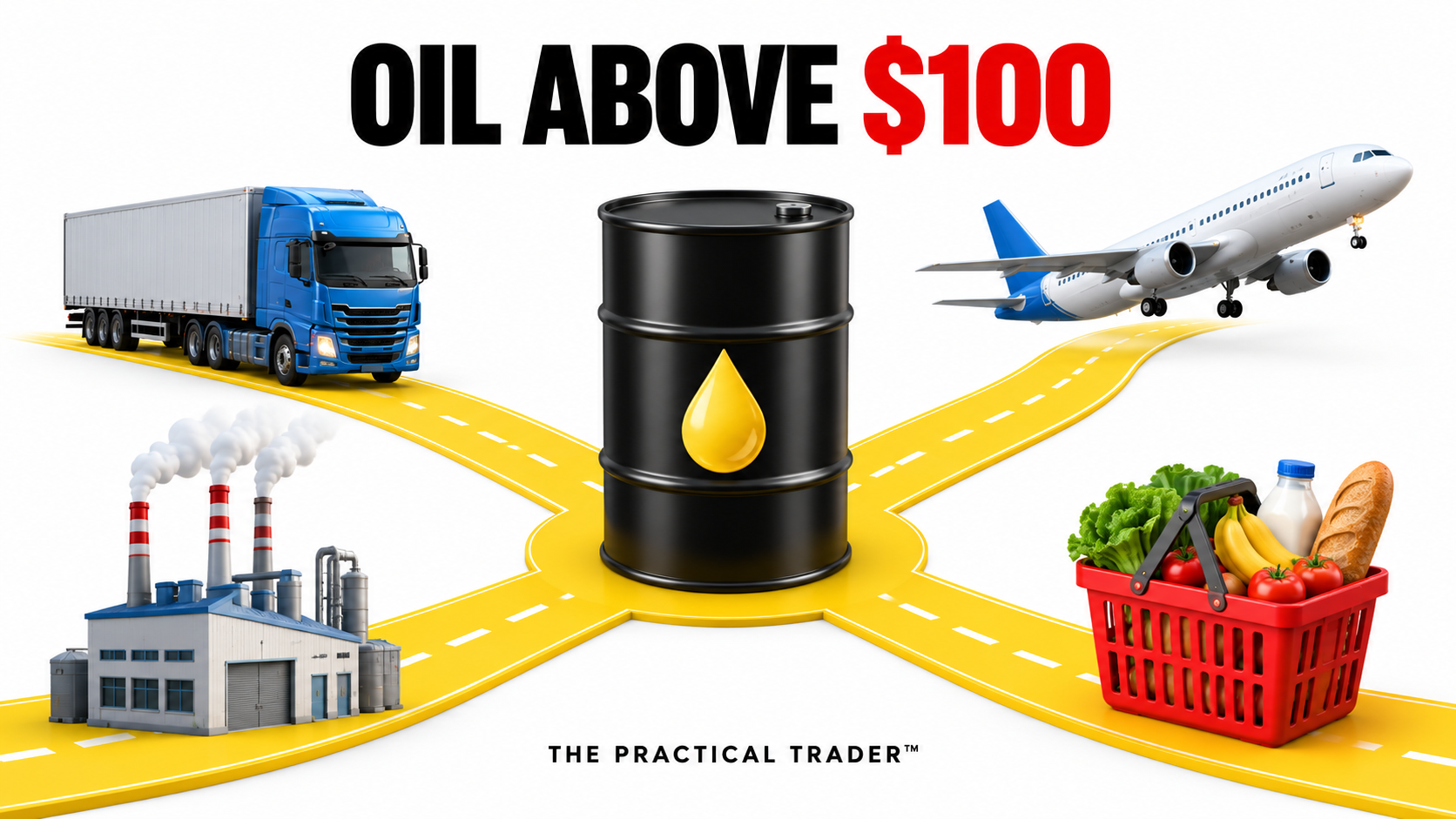
1. Oil Above $100: The Toll That Travels
Brent crude oil climbed above $107 per barrel as disruptions affecting major Middle Eastern supply routes raised concerns that less oil would reach the global market.
Why should a beginning trader care?
Think of higher oil prices as a toll placed on the economy. Airlines, delivery companies and manufacturers pay more for fuel. Some of those costs may eventually reach consumers through higher prices. Energy companies may benefit, while fuel-dependent businesses can see profits squeezed.
The Practical Trader lesson
One dramatic price should not decide a trade. Watch whether sustained oil prices begin changing corporate forecasts, inflation readings and the broader market trend.
Source: Reuters
2. Inflation Puts the Federal Reserve Back in Focus
August wholesale inflation data, combined with surging energy prices, increased expectations that the Federal Reserve could raise interest rates at its next meeting.
Why should a beginning trader care?
Higher interest rates make borrowing more expensive for consumers and businesses. They can slow spending, reduce corporate profits and place pressure on stock prices—especially companies whose valuations depend heavily on future growth.
The Practical Trader lesson
Do not trade solely on predictions about what the Federal Reserve might do. Watch the inflation evidence, the Fed’s actual decision and the market’s reaction.
Source: Reuters
3. Treasury Yields Rise and Compete With Stocks
Treasury yields climbed as investors worried about inflation and future interest rates. The 10-year Treasury yield reached its highest level in nearly three years.
Why should a beginning trader care?
When relatively safe government bonds offer higher returns, investors may become less willing to pay elevated prices for stocks. Higher yields can also increase mortgage, auto-loan and business-borrowing costs.
The Practical Trader lesson
Stocks do not operate in isolation. Bond yields help show the financial environment surrounding the market. When yields rise quickly, look for confirmation before becoming more aggressive.
Source: Reuters
4. Apple Begins a New Product Test
Apple shares moved higher after the company introduced its first foldable iPhone, priced at $1,999. Investors are evaluating whether the new device can create another meaningful source of growth.
Why should a beginning trader care?
A product announcement creates excitement, but lasting value depends on demand, pricing, production costs and whether consumers embrace the product.
The Practical Trader lesson
Do not confuse launch-day enthusiasm with proof of long-term success. The announcement begins the story; sales and earnings eventually provide the evidence.
Source: The Wall Street Journal
5. Retail Stocks Show That Expectations Matter
Macy’s raised its annual forecasts after reporting stronger results, but its shares still declined because the improvement did not satisfy investors. American Eagle Outfitters also fell sharply after maintaining its sales outlook amid uneven discretionary spending.
Why should a beginning trader care?
A company can report good news and still see its stock decline. The market compares the results with what investors already expected—not simply whether the numbers appear positive.
The Practical Trader lesson
Always ask two questions: “What happened?” and “What did the market expect?” The difference between those answers often explains the stock’s reaction.
Source: Reuters
Today’s Bigger Picture
These stories are connected. Higher oil prices can increase inflation. Inflation can influence interest rates. Higher rates can pressure stocks, businesses and consumers. Individual companies must then prove they can perform within that environment.
A practical trader does not react to one headline. Build the case, compare the evidence and decide with discipline.
Which of today’s five stories do you believe could have the greatest effect on the market over the next month?
Follow The Practical Trader™
Follow The Practical Trader™ on Facebook, LinkedIn and Instagram for practical market education created for beginning traders.
Trade with Evidence. Decide with Discipline.
For educational purposes only. This content is not financial, investment, tax or legal advice.
Leave a Reply