
Friday, September 11, 2026
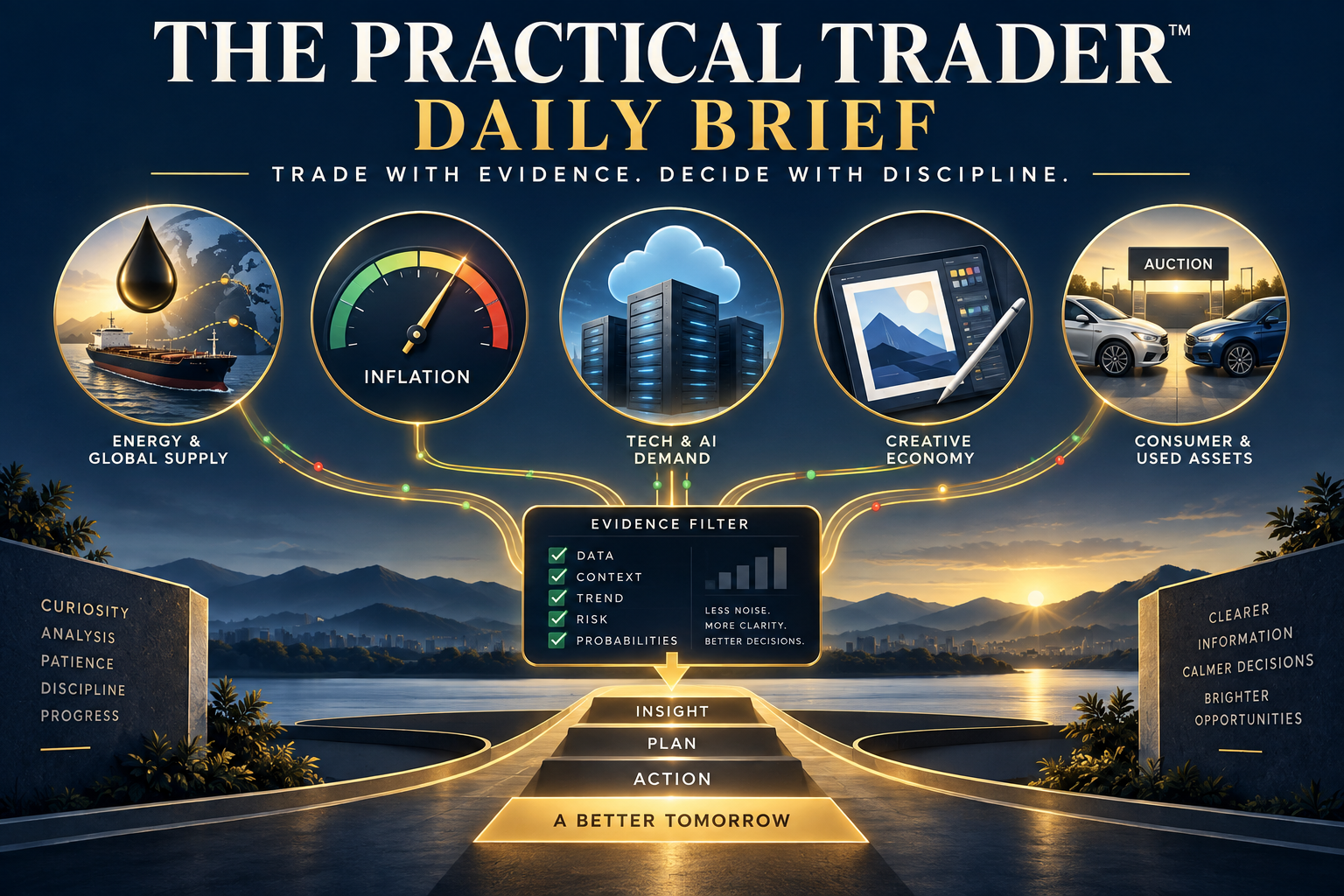
A practical look at five market stories—and what each one teaches a beginning trader.
1. Oil, shipping routes and the inflation chain
Crude oil remained near the psychologically important $100-per-barrel level as conflict in the Middle East continued to disrupt major shipping routes, including the Strait of Hormuz. The pressure is reaching beyond energy markets: Treasury yields have climbed as investors consider whether higher fuel and transportation costs could keep inflation elevated.
Why should a beginning trader care?
Oil does not affect only energy companies. It is an input cost for airlines, delivery businesses, manufacturers and consumers. When oil becomes more expensive, those costs can travel through the economy and affect profit margins, inflation and interest rates.
The Practical Trader lesson
Follow the chain of evidence. A rising commodity price becomes more meaningful when it begins changing company forecasts, inflation data and bond yields.
What to watch next: Whether oil holds above $100, how Treasury yields respond and whether fuel-dependent companies lower their outlooks.
Source: Reuters Morning Bid
2. Inflation data puts the Federal Reserve back in focus
The Consumer Price Index rose 0.4% in August and 3.4% from a year earlier, leaving the annual inflation rate unchanged from July. Core inflation, which excludes food and energy, rose 0.3% for the month and eased to 2.4% over the year from 2.5%. The mixed result gives the Federal Reserve fresh evidence to consider before its next interest-rate decision.
Why should a beginning trader care?
Interest rates influence borrowing costs and the value investors place on future company profits. That means one inflation report can move bonds, technology shares, banks and other parts of the market at the same time.
The Practical Trader lesson
Do not trade the prediction. Wait for the number, observe the market’s reaction and then evaluate whether the reaction changes the trend.
What to watch next: The 10-year Treasury yield, the market’s expectations for the next Federal Reserve meeting and whether higher energy costs spread into future inflation reports.
Source: U.S. Bureau of Labor Statistics
3. Oracle gives investors evidence behind the AI story
Oracle reported quarterly revenue of $19.3 billion, up 30% from a year earlier. The company said cloud-infrastructure growth reached triple digits and raised its fiscal-year outlook to at least $90 billion in revenue. The results helped answer an important market question: can enormous spending on artificial-intelligence infrastructure produce measurable business growth?
Why should a beginning trader care?
AI enthusiasm has lifted many stocks, but enthusiasm alone cannot support valuations forever. Revenue growth, contracts, margins and cash flow provide the evidence needed to judge whether the story is becoming a business result.
The Practical Trader lesson
A strong headline is the beginning of the analysis—not the end. Compare growth with spending, debt, margins and the company’s ability to turn its backlog into revenue.
What to watch next: Cloud revenue, capital spending, free cash flow and progress converting signed contracts into sales.
Source: Oracle Investor Relations
4. Adobe shows why good results can still disappoint
Adobe reported higher revenue and profit and raised its full-year outlook, yet its shares moved lower as investors weighed slower recurring-revenue growth, the economics of its expanding freemium model and a coming leadership transition.
Why should a beginning trader care?
A stock does not move only because results are “good” or “bad.” It moves according to the difference between reported results, prior expectations and what management says about the future.
The Practical Trader lesson
Never stop at the earnings headline. Guidance, margins, recurring revenue and the market’s expectations often explain the price reaction more clearly than the reported profit.
What to watch next: Subscriber conversion, recurring-revenue growth, AI-related costs and the company’s next-quarter guidance.
Source: The Wall Street Journal
5. Copart’s ACV purchase demonstrates the power of a takeover premium
Copart agreed to acquire ACV Auctions in an all-cash transaction valued at approximately $1.9 billion. The $10.50-per-share offer represented a premium of roughly 45% over ACV’s unaffected August 10 closing price.
Why should a beginning trader care?
When a buyer offers substantially more than a company’s previous market price, the target’s shares can jump quickly toward the offer price. The buyer’s shares may react differently as investors evaluate the purchase price, financing and expected benefits.
The Practical Trader lesson
A takeover announcement changes the evidence, but it does not eliminate risk. Deals can face regulatory, financing or shareholder obstacles, and the remaining price gap often reflects uncertainty about closing.
What to watch next: Shareholder approval, regulatory reviews, the expected closing schedule and the trading gap between ACV’s price and the $10.50 offer.
Source: Copart
Today’s process reminder
Markets can deliver several dramatic stories at once. Your job is not to react to every headline. Identify what changed, decide whether it affects your original case and wait for confirming evidence before acting.
Question for readers: Which matters more to your decisions today: oil prices, inflation, interest rates or company earnings?
Trade with Evidence. Decide with Discipline.
For educational purposes only. This material is not financial, investment, tax or legal advice.
Follow The Practical Trader on Facebook, Instagram and LinkedIn for practical market lessons written for beginning traders.
Leave a Reply