
September 15, 2026
A practical look at four market stories—and what each one teaches a beginning trader.
1. The $107 Ripple

U.S. stock futures slipped as Brent crude traded above $107 per barrel and the 10-year Treasury yield climbed above 5%. Expensive oil can fuel inflation, while higher bond yields increase borrowing costs and give investors a potentially more attractive alternative to stocks.
Why should a beginning trader care?
Think of oil as a stone dropped into water: its effects can spread to airlines, delivery companies, manufacturers and consumers. Higher yields can also place extra pressure on expensive growth stocks.
The Practical Trader lesson
Follow the chain of evidence instead of reacting to one number. Watch whether oil and yields remain elevated—and whether companies begin lowering their forecasts.
What to watch next:
- Does Brent crude remain above $107?
- Does the 10-year Treasury yield remain above 5%?
- Do fuel-dependent companies lower their forecasts?
- Do growth stocks continue weakening?
2. A SMALLER CHIP, A BIGGER CONTEST

MediaTek introduced a premium smartphone processor manufactured with TSMC’s advanced 2-nanometer technology. The company says its new chip delivers substantially better performance for artificial-intelligence tasks performed directly on a phone.
Why should a beginning trader care?
Smaller, more capable chips can improve performance while expanding competition across semiconductor manufacturers, smartphone brands and equipment suppliers.
The Practical Trader lesson
A promising product is only the beginning of the story. Look for customer adoption, production capacity and profitable sales before deciding whether excitement is becoming measurable business growth.
What to watch next:
- Do smartphone manufacturers adopt the new chip?
- Can TSMC produce enough chips to meet demand?
- Does MediaTek report meaningful sales growth?
- Does the product improve the company’s profitability?
3. THE CHIP-SUPPLY PRESSURE POINT
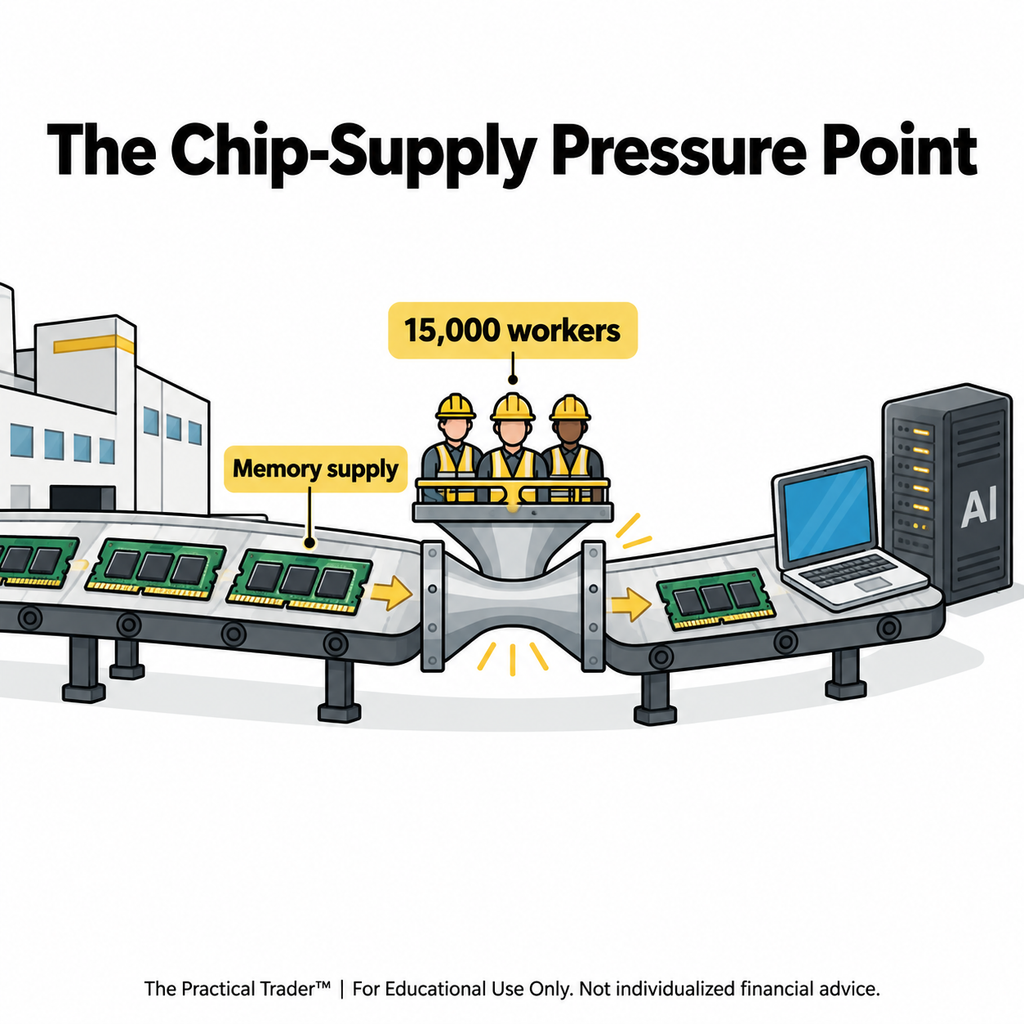
Unions representing more than 80% of Micron’s approximately 15,000 workers in Taiwan are seeking a permanent profit-sharing arrangement and keeping strike preparations active. Micron’s Taiwan operations produce memory chips used in computers and AI servers during an already tight supply environment.
Why should a beginning trader care?
A company can have strong demand and still face operational risks. A prolonged production interruption could affect Micron, its customers and memory-chip prices throughout the supply chain.
The Practical Trader lesson
Before trading a fast-growing theme such as AI, study the less-obvious pressure points: labor, manufacturing capacity and dependable access to critical components.
A note from Steven
Micron is on my watchlist, and I have traded the company at different times over the years. This news does not automatically create a trading decision, but it gives me a reason to monitor the company more closely. I will be watching the labor negotiations, possible production effects and the market’s response as new evidence develops.
What to watch next:
- Do Micron and its workers reach an agreement?
- Does a strike become more likely?
- Is memory-chip production disrupted?
- Do memory-chip prices continue rising?
4. AI NEEDS MORE THAN CHIPS
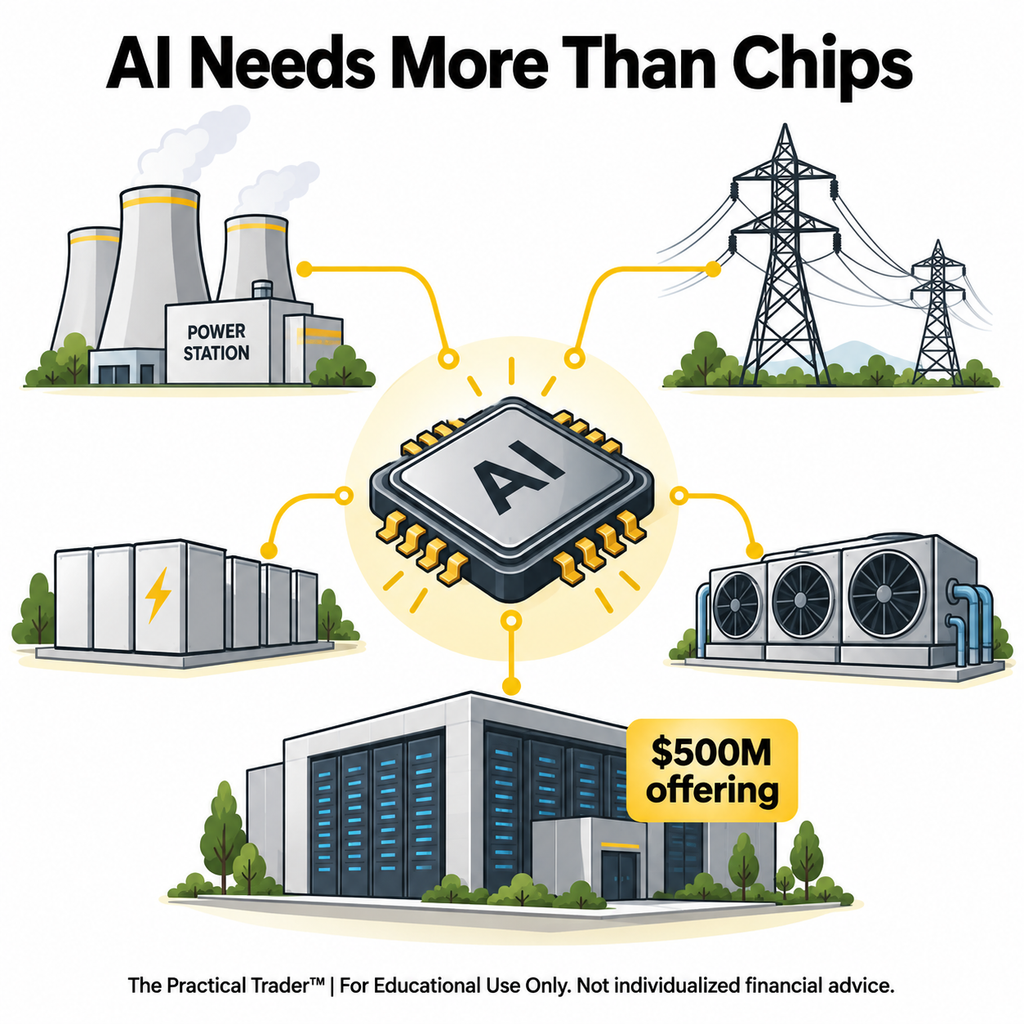
SoftBank-backed SB Energy plans to sell as much as $500 million in shares to Japanese investors as part of a proposed U.S. public offering. The company develops data centers and their supporting power infrastructure, showing how the AI expansion is creating demand far beyond semiconductor companies.
Why should a beginning trader care?
AI data centers require enormous amounts of electricity, storage and physical infrastructure. That means power generation and grid capacity may become just as important to the story as computing hardware.
The Practical Trader lesson
A popular theme can contain several different businesses and risk levels. Understand exactly how a company expects to make money—and remember that an exciting IPO can still arrive at an unattractive price.
What to watch next:
- Does the proposed IPO move forward?
- What valuation does SB Energy receive?
- How will the company use the money raised?
- Does demand for AI power infrastructure continue growing?
Today’s process reminder
Follow what changes, identify who may be affected and wait for measurable evidence before making a decision.
Question for readers
Which of today’s developments will you be watching most closely—and what evidence will you look for next? Share your thoughts in the comments.
Trade with Evidence. Decide with Discipline.
Follow The Practical Trader™
- https://www.facebook.com/ThePracticalTrader
- https://www.linkedin.com/in/steven-uhl-practical-trader/
- https://www.instagram.com/thepracticaltraderofficial
- https://www.tiktok.com/@stevenuhl3
For educational purposes only. This material is not financial, investment, tax, or legal advice.
#ThePracticalTrader #InvestingEducation #StockMarket
Leave a Reply